
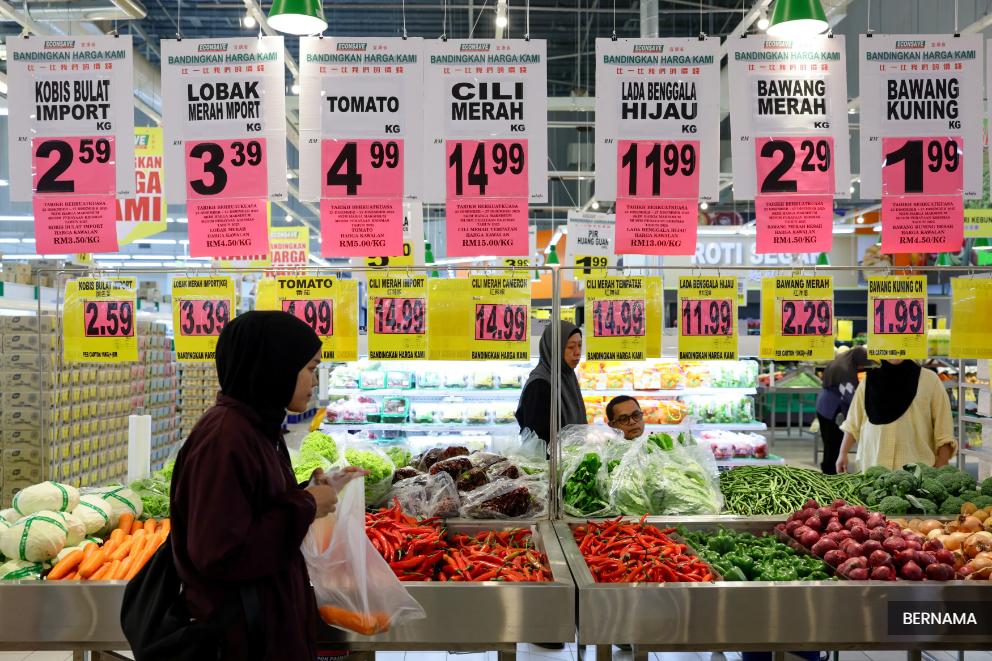
Malaysia’s inflation rate has moderated, but many households continue to experience financial pressure because the prices of essential goods remain higher than they were several years ago.
Bank Negara Malaysia (BNM) highlighted the difference between a slower rate of price increases and an actual reduction in household living expenses.
News details
- Malaysia’s headline inflation averaged 1.4% in 2025, the lowest level in five years.
- During the first nine months of 2026, inflation averaged 1.8%, while core inflation stood at 2%.
- However, lower inflation does not mean that food, housing, transportation and other necessities have returned to their previous prices.
- BNM explained that the Consumer Price Index (CPI) measures how quickly prices change, rather than whether goods are affordable.
- Between 2019 and 2024:
- Malaysia’s headline CPI increased by 9.3%.
- Nominal wages per worker increased by only 7.2%.
- This difference means that average wages did not keep pace with cumulative price increases.
- BNM also explained that people tend to notice increases in frequently purchased items such as food and beverages more strongly than price reductions in other categories.
- The minimum wage is scheduled to increase from RM1,700 to RM2,000 in June 2027, benefiting more than four million workers.
- Budget 2027 also provides for increased STR and SARA assistance, with the combined allocation expected to reach RM16 billion.
Business and economic impact
- Businesses may face pressure to review salary structures as employees seek wages that better reflect living costs.
- Employers should consider productivity improvements to manage higher labour expenses.
- Retailers and food businesses may need to review pricing strategies as consumers become more careful with spending.
- SMEs should monitor operating costs, supplier prices and cash flow.
- Higher household incomes could support consumer spending, provided wage growth is sustainable.
What businesses should watch: Wage growth, food prices, minimum-wage implementation and government assistance measures in 2027.